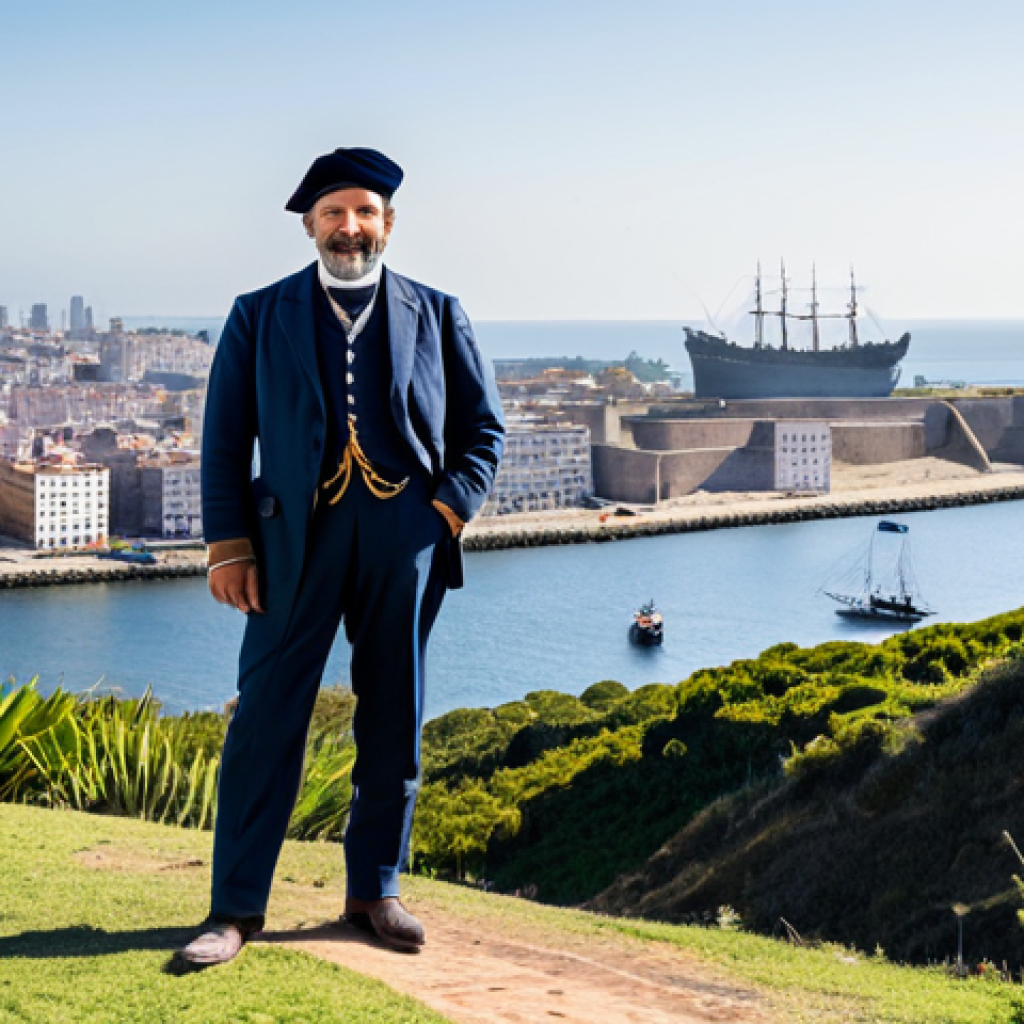
Stepping back in time to Uruguay’s Spanish colonial era feels less like a dry history lesson and more like uncovering the very bedrock of a nation. I often ponder how those initial encounters between indigenous Charrúa people and the ambitious Spanish conquistadors set the stage for everything that followed.
It wasn’t just about flags and claims; it was about the profound clash of worlds, the establishment of early settlements like Montevideo, and the relentless pursuit of economic gain that shaped the entire River Plate region.
This era, rife with complex power struggles, laid down deeply woven threads of culture, language, and social structure that remain undeniably part of Uruguay’s unique fabric even today.
Examining this period isn’t just an academic exercise; it’s crucial for understanding contemporary debates around identity, land rights, and the enduring legacies of colonialism that echo in modern geopolitical and economic landscapes.
We see its fingerprints in Uruguay’s vibrant blend of European and indigenous influences, and how that past informs its present-day relationships across Latin America.
The very concept of nationhood, of what it means to be Uruguayan, was forged in these crucible years. It reminds us that history is not static; it’s a living force that continues to inform our present and future paths.
Let’s uncover the full story.
The Arrival of Empires: Clash on the Río de la Plata
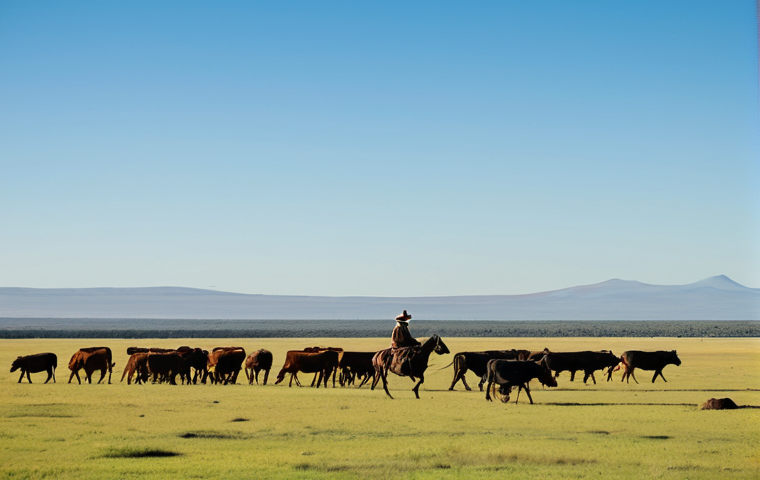
When I first delved into the history of Uruguay, I was genuinely struck by the sheer audacity of the early European explorers. It wasn’t just about discovery; it was an aggressive assertion of power into a world that had existed perfectly well without them for millennia.
The arrival of the Spanish in the early 16th century, particularly figures like Juan Díaz de Solís in 1516, wasn’t met with open arms, but with the fierce resistance of the indigenous Charrúa people.
I can almost feel the tension in the air as these two vastly different cultures first collided on the banks of the Río de la Plata. The Spanish, driven by a potent mix of religious fervor, a thirst for gold, and the strategic importance of the River Plate as a gateway to potential riches further inland, saw this vast, fertile land as ripe for the taking.
This initial period, marked by sporadic skirmishes rather than formal conquest, underscores a brutal reality: the Charrúa were formidable, unyielding, and their deep connection to their ancestral lands meant they weren’t easily subjugated.
Their resilience, which I find incredibly inspiring, forced the Spanish to adopt a more cautious, often indirect, approach in the early years. It’s a powerful reminder that history isn’t always written by the victors in the first chapter.
1. Early Expeditions and Indigenous Resistance
The first European sightings of what would become Uruguay were by Spanish and Portuguese navigators, each vying for supremacy in the New World. While Solís is often credited with the “discovery” of the Río de la Plata, his expedition ended tragically, highlighting the dangers and the fierce independence of the local populations.
I’ve read accounts that describe the Charrúa as incredibly skilled warriors, adept at using their knowledge of the terrain to their advantage. Their effective use of ambushes and their unwillingness to be enslaved meant that for decades, the Banda Oriental – the ‘Eastern Bank’ – remained largely a frontier zone, a buffer between competing colonial powers.
It wasn’t until the 17th century that more sustained efforts at colonization began to take root, driven less by immediate gold rushes and more by strategic geopolitical interests and the burgeoning cattle industry.
2. The Elusive Search for Wealth
Unlike other parts of the Americas where vast empires and easily exploitable mineral wealth beckoned, the Banda Oriental presented a different kind of challenge.
There were no grand Inca or Aztec cities to plunder, no readily available gold or silver mines. This absence of immediate mineral wealth meant that the Spanish focus gradually shifted to the fertile grasslands and the immense potential for livestock.
It’s fascinating to consider how this seemingly less glamorous pursuit ultimately shaped the region’s entire economic future, laying the groundwork for Uruguay’s enduring identity as a nation of cattle ranchers.
This strategic pivot, in my opinion, was a critical turning point that distinguished Uruguay’s colonial experience from that of its neighbors.
Founding Montevideo: A Strategic Bastion
For years, I’ve understood Montevideo primarily as Uruguay’s vibrant capital, but delving into its origins as a Spanish colonial stronghold really puts its strategic importance into perspective.
The establishment of San Felipe y Santiago de Montevideo in 1724, while seemingly late compared to other South American cities, was a direct response to Portuguese encroachment from Brazil.
Spain couldn’t afford to lose control of this vital natural harbor at the mouth of the Río de la Plata. I can almost picture the early settlers, grappling with the elements, building fortifications, and trying to carve out a life in what was still a wild frontier.
The city wasn’t just a settlement; it was a military outpost, a customs house, and a key port for trade and, yes, often illicit contraband. The deep, sheltered bay offered an unparalleled advantage for controlling maritime traffic, making Montevideo a prize worth fighting for repeatedly.
Its very existence was a statement of Spanish intent, a line drawn in the sand against Portuguese expansionism.
1. Geopolitical Chessboard of the River Plate
The River Plate basin was, frankly, an enormous geopolitical chessboard. Spain and Portugal were constantly vying for control, and Montevideo became a central pawn in this grand game.
The Portuguese had established Colonia del Sacramento directly across the river, a clear challenge to Spanish dominance. This constant friction meant that Montevideo was fortified extensively, becoming a formidable defensive structure that, in my view, profoundly shaped the city’s early development and its residents’ collective identity.
It became a melting pot of soldiers, administrators, merchants, and adventurers, all drawn by its strategic allure.
2. Early Urban Development and Socio-Economic Life
Life in early Montevideo was structured around its military and administrative functions. The grid-like street plan, typical of Spanish colonial cities, was laid out, and infrastructure like the port, customs houses, and churches began to take shape.
I imagine the bustling docks, the ships arriving from Spain and other colonies, bringing goods, news, and new settlers. Economically, Montevideo thrived on trade, both legal and illegal.
The vast herds of wild cattle in the surrounding countryside provided hides, tallow, and salted meat, which became crucial export commodities. This early economic model, rooted in livestock and maritime trade, cemented Montevideo’s role as the economic heart of the Banda Oriental.
Economic Engines: The Cattle Kingdom and Contraband
If you want to understand colonial Uruguay, you simply cannot overlook the profound impact of cattle. It wasn’t just an industry; it was the lifeblood, the very pulse of the colonial economy.
I often think about the vast, open grasslands, seemingly endless, where millions of wild cattle roamed freely, descendants of those brought by early settlers.
This wasn’t planned ranching in the modern sense; it was a free-for-all, a source of incredible wealth for anyone brave or shrewd enough to exploit it.
The hide trade, in particular, was booming. Europe’s growing demand for leather for shoes, harnesses, and industrial machinery created an insatiable market.
This drove the expansion of the *estancias* (large ranches) and the rise of the *gaucho* – the iconic horseman whose life was inextricably linked to the cattle.
It felt like a wild, untamed frontier economy, raw and incredibly dynamic, shaping the very landscape and culture of the region.
1. The Rise of the Estancia and the Gaucho Culture
The *estancia* became the quintessential economic unit, transforming the landscape and the social structure of the Banda Oriental. These vast ranches, often worked by a mix of mestizos, indigenous laborers, and free gauchos, represented a unique colonial development.
I’ve always been fascinated by the figure of the gaucho; they embodied a spirit of independence, resilience, and a deep connection to the land and the horses.
Their skills in cattle herding, riding, and their self-sufficient lifestyle became legendary, defining a significant part of Uruguayan identity that still resonates today.
The sheer scale of the herds meant that the primary products were hides, tallow, and salted meat (tasajo), which were easily transportable and highly valued.
2. The Pervasive World of Contraband Trade
Despite official Spanish monopolies, contraband was not just rampant; it was, in many ways, an integral part of the colonial economy, especially in a region like the Banda Oriental, sandwiched between competing empires.
Goods from British, Portuguese, and even French sources flowed freely through unofficial channels, often facilitated by the very officials meant to stop it.
I’ve learned that this illicit trade was a crucial way for colonists to access a wider variety of goods at better prices than those dictated by the Spanish crown.
It wasn’t just a side hustle; it often overshadowed legal commerce, fueling local economies and creating powerful, clandestine networks. This grey market often meant the difference between prosperity and poverty for many settlers, and it underscores the challenges Spain faced in truly controlling its vast colonial empire.
| Key Colonial Eras & Economic Drivers in Uruguay | Period | Dominant European Power(s) | Primary Economic Activities | Key Social Groups |
|---|---|---|---|---|
| Initial Exploration & Resistance | Early 16th – Mid 17th Century | Spanish (limited presence) | Minimal European settlement, sporadic exploration, indigenous resistance (Charrúa) | Indigenous Charrúa, early Spanish explorers |
| Emergence of Frontier & Cattle Economy | Mid 17th – Early 18th Century | Spanish, Portuguese encroachment | Wild cattle harvesting (hides, tallow), informal settlements | Gauchos, early ranchers, missionaries |
| Founding of Montevideo & Strategic Fortification | Early 18th – Late 18th Century | Spanish (stronger presence), Portuguese rivalry | Port trade, formal cattle ranching, military administration, some agriculture | Spanish administrators, soldiers, merchants, early criollos |
| Napoleonic Wars & Independence Stirrings | Early 19th Century | Spanish, British invasions, Portuguese occupation | Continued cattle industry, increased contraband, rise of independence movements | Criollos, gauchos, enslaved Africans, European immigrants |
Struggles for Sovereignty: Caught Between Empires
Uruguay’s colonial history isn’t a neat, linear progression; it’s a messy, often brutal, tug-of-war between powerful empires. The Banda Oriental, strategically positioned at the gateway to South America, was a prize coveted by both Spain and Portugal (and later, even briefly, by the British).
I’ve often thought about how frustrating it must have been for the local inhabitants – the *criollos* (American-born Spaniards) and the *gauchos* – to constantly be caught in the crossfire of distant European squabbles.
This relentless external pressure meant that the concept of a distinct “Uruguayan” identity was forged in a crucible of conflict and resistance, not just against the colonial powers themselves, but against each other in the fight for control.
The very geography of the region, with its open plains and easy access to the sea, made it a natural battlefield, delaying a clear path to self-determination for centuries.
1. The Spanish-Portuguese Border Wars
The constant skirmishes and full-scale wars between Spain and Portugal over the Banda Oriental are a testament to its strategic value. For me, these weren’t just abstract historical events; they were real, bloody conflicts that shaped the lives of everyone in the region.
The founding of Colonia del Sacramento by the Portuguese in 1680, directly across from Buenos Aires, was a blatant challenge to Spanish hegemony, leading to cycles of occupation, treaties, and re-conquest that lasted for over a century.
This volatile border situation meant that the region was always militarized, always on edge, and its economy often disrupted by the ebb and flow of war.
2. British Invasions and Early Independence Stirrings
As if the Spanish-Portuguese rivalry wasn’t enough, the Napoleonic Wars dragged Uruguay into even wider global conflicts. The British invasions of the River Plate in 1806 and 1807, though ultimately repelled, were profoundly significant.
I believe they acted as a kind of wake-up call for the *criollos*, demonstrating that Spain was no longer an invincible power and that the colonists could, in fact, defend themselves.
These invasions, while short-lived, deeply influenced the burgeoning independence movements across Latin America, including in Uruguay. They sowed seeds of self-reliance and hinted at a future where the region might dictate its own destiny, rather than being a pawn in European imperial games.
Cultural Fusion: Enduring Legacies of a Complex Past
When I walk through the streets of Montevideo or travel through the Uruguayan countryside, I’m always struck by how deeply the colonial past is embedded in the present.
It’s not just in the architecture of Ciudad Vieja, but in the language, the food, the customs, and even the national psyche. The Spanish colonial era, with its layers of indigenous resistance, European settlement, and forced African migration, created a truly unique cultural tapestry.
It wasn’t a simple overlay; it was a complex fusion, often painful, but ultimately enriching, shaping the very soul of the nation. I feel that understanding this blending of traditions, beliefs, and ways of life is absolutely essential to appreciating the vibrant, resilient spirit of modern Uruguayans.
It’s a powerful testament to how human cultures adapt, absorb, and transform under pressure.
1. Language, Religion, and Architecture
The most obvious legacies are, of course, the Spanish language and Roman Catholicism, which became dominant cultural forces. However, I’ve found that even within these, there are subtle local inflections.
The architecture, particularly in Montevideo’s old city, proudly displays its colonial heritage with its plazas, narrow streets, and imposing public buildings.
These elements aren’t just relics; they are living spaces, still serving the functions they were built for centuries ago, which I find incredibly compelling.
The enduring presence of these foundational elements speaks volumes about the lasting impact of Spanish rule.
2. The Rich Blend of Culinary and Social Traditions
Uruguayan cuisine, in my experience, is a delightful blend of European and indigenous influences. The centrality of beef, grilled *asado*-style, is a direct legacy of the cattle ranches established during the colonial era, but the way it’s prepared and shared around a communal table speaks to a deep-seated social tradition.
The custom of sharing *mate*, a traditional herbal infusion, is another powerful example of cultural continuity, connecting contemporary Uruguayans to their indigenous and gaucho past.
These aren’t just traditions; they are daily rituals that reinforce a sense of community and shared heritage, linking the past to the present in a very tangible way.
Echoes of the Past: How Colonialism Shapes Modern Uruguay
As an individual who frequently reflects on the intricate threads connecting history to the present, I consistently find myself pondering how the Spanish colonial period isn’t merely a closed chapter in Uruguayan history.
Instead, it feels more like a foundational blueprint, profoundly influencing the nation’s political landscape, economic structure, and cultural identity even today.
The echoes of those centuries reverberate through contemporary debates, policy decisions, and the very way Uruguayans perceive themselves and their place in the world.
It’s impossible, in my view, to fully grasp the nuances of modern Uruguay – its unique blend of European heritage and indigenous resilience, its deeply rooted democratic traditions, or its complex relationship with its larger neighbors – without first understanding the crucible of its colonial past.
The struggles for land, the economic reliance on agriculture, and the enduring spirit of independence were all forged in those formative years, and they continue to shape the nation’s trajectory.
1. Political Structures and Democratic Traditions
The administrative divisions, legal frameworks, and even the initial urban planning established during the Spanish colonial era laid the groundwork for future political structures.
While Uruguay famously embraced democracy early on, the very concept of a centralized state, of governance, stemmed from colonial models. I believe it’s fascinating to observe how these transplanted systems were then adapted and molded by local realities and the fierce independent spirit of the *criollos* and *gauchos*.
The push and pull between central authority and regional autonomy, a theme evident throughout the colonial period, continued to play out in the nascent republic, shaping its unique democratic path.
The long struggle for self-determination against multiple foreign powers also instilled a deep value for national sovereignty, something I truly admire about the Uruguayan spirit.
2. Enduring Socio-Economic Legacies and Identity
The socio-economic stratification that emerged during the colonial period – the Spanish-born elites, the *criollos*, the mestizos, indigenous peoples, and enslaved Africans – left indelible marks on Uruguayan society.
While much has changed, patterns of land ownership, economic power, and social influence can still trace their roots back to these colonial foundations.
I’ve personally seen how debates around land rights or the recognition of indigenous heritage often harken back to historical injustices and the distribution of wealth from centuries past.
Furthermore, the strong emphasis on agriculture and livestock, established as the economic backbone during the Spanish era, continues to be a cornerstone of Uruguay’s economy, even in the 21st century.
This deep historical connection to the land and its resources continues to inform national identity, solidifying the idea of Uruguay as a nation born from its fertile plains and the enduring legacy of the *gaucho*.
Concluding Thoughts
So, as we close the book on Uruguay’s colonial journey, it becomes abundantly clear that this wasn’t just a simple historical phase. It was a foundational, often turbulent, forging of a nation. The constant push and pull of empires, the indomitable spirit of its people, and the economic backbone built on vast herds of cattle all converged to create the resilient, unique Uruguay we know today. Understanding these colonial roots isn’t just about revisiting the past; it’s about truly appreciating the vibrant present and the enduring character of a nation born from defiance and a deep connection to its land. It’s a story that continues to resonate.
Useful Information
1. When visiting Montevideo, make sure to explore Ciudad Vieja (Old City). Its colonial-era architecture, including the Cabildo and Metropolitan Cathedral, offers a tangible link to the city’s Spanish origins and strategic importance.
2. The “Treaty of Tordesillas” (1494) originally divided the New World between Spain and Portugal, directly impacting the contested ownership of the Banda Oriental and fueling centuries of conflict.
3. Look for the enduring influence of the *gaucho* culture throughout Uruguay. Their iconic image and skills, developed during the colonial cattle boom, are celebrated in local festivals, music, and cuisine.
4. Uruguay’s strategic location on the Río de la Plata made it a vital gateway for trade and military operations, attracting attention from multiple European powers beyond just Spain and Portugal, including brief British incursions.
5. While Spanish is the official language, listen for unique Uruguayan expressions and accents, which have evolved over centuries, blending influences from diverse immigrant groups and the native population.
Key Takeaways
Uruguay’s colonial history was largely defined by its strategic location at the Río de la Plata, making it a constant battleground between Spanish and Portuguese empires.
The absence of immediate mineral wealth led to the dominance of the cattle industry, which profoundly shaped the economy, landscape, and the rise of the iconic *gaucho* culture.
Montevideo was founded as a crucial Spanish military and trade bastion against Portuguese encroachment, becoming the economic and administrative heart of the Banda Oriental.
Contraband trade was a pervasive and often essential part of the colonial economy, highlighting the challenges of imperial control and the resourcefulness of the settlers.
The complex interplay of European, indigenous, and African influences forged a unique Uruguayan cultural identity, marked by resilience, a strong sense of independence, and enduring socio-economic legacies that continue to shape the nation.
Frequently Asked Questions (FAQ) 📖
Q: The text mentions a “profound clash of worlds” between the Charrúa people and the Spanish conquistadors. What made this encounter so uniquely impactful for Uruguay, and how might it differ from other colonial stories one might be familiar with?
A: You know, it’s easy to generalize about colonialism, but my deep dive into Uruguay’s story has always highlighted something distinct. While many regions saw European powers simply taking over, here, especially with the Charrúa, it felt less like a swift conquest and more like a slow, painful erosion of a distinct way of life against an unrelenting tide.
The Charrúa weren’t easily subdued; they were fierce, and their resistance, though ultimately tragically outmatched by Spanish weaponry and disease, left a deep, almost spectral mark on the land and the early settlers’ psyche.
It wasn’t just about military might; it was the Spanish bringing a whole new concept of land ownership and settled life to a nomadic people, creating a fundamental, almost philosophical disconnect that you don’t always see described with such raw intensity in other colonial narratives.
This deep-seated initial struggle, I believe, really set the tone for Uruguay’s later independent spirit and its complex relationship with its own origins.
Q: The text suggests this era’s “fingerprints” are still visible today. Can you share a concrete example of how this Spanish colonial past continues to influence modern Uruguay, perhaps in its culture or its relationships with other nations?
A: Absolutely! One of the most striking “fingerprints” for me is how Uruguay’s very identity feels like a constant conversation between those early European influences and a deeply rooted, yet often understated, indigenous echo.
Think about the language, obviously Spanish, but also subtle nuances in their unique “Rioplatense” accent and some local slang that hint at the diverse origins.
More profoundly, you see it in the political discourse around land use and the environment. I remember talking to an activist in Montevideo who passionately argued that current agricultural expansion debates, for instance, aren’t just about economics; they’re direct descendants of those colonial land appropriations, raising fundamental questions about who truly owns and benefits from the land’s bounty.
This isn’t just theory; it’s lived experience for many Uruguayans, shaping their perspectives on everything from trade agreements to how they view their place within the broader South American tapestry.
It’s a constant, simmering reminder of where their nation came from.
Q: The idea that “the very concept of nationhood… was forged in these crucible years” is powerful. How did the challenges and power struggles of the colonial era specifically contribute to what it means to be Uruguayan today, and why is that understanding still so critical?
A: That’s a brilliant observation, because “nationhood” isn’t just a label, is it? For Uruguay, those crucible years truly hammered out its distinct character.
Think about it: they were caught between the Portuguese and Spanish empires, a constant tug-of-war for control of the strategically vital River Plate.
This perpetual state of being “the buffer zone,” fought over and coveted, I believe, instilled a fierce sense of self-reliance and a slightly wary independence in the Uruguayan psyche.
It wasn’t about being just another Spanish colony; it was about defining themselves despite being pulled in different directions. This constant struggle for autonomy, even before formal independence, cultivated a deep-seated value for democracy and a very pragmatic, no-nonsense approach to governance that you still see today.
Understanding this isn’t just academic; it’s vital for appreciating their geopolitical stances, their commitment to international law, and even their sometimes surprisingly progressive social policies.
It shows that identity isn’t born in a vacuum; it’s forged in fire, and those colonial flames still flicker, guiding their path.
📚 References
Wikipedia Encyclopedia
구글 검색 결과
구글 검색 결과
구글 검색 결과
구글 검색 결과
구글 검색 결과